Toronto · insured, WSIB-covered
Chimney Services in Toronto
Sweeping, WETT inspections, repointing, liners and caps. One call puts you through to an insured local company that works your part of Toronto — and for a gas appliance we will tell you it needs a TSSA-registered technician instead.
- WETT inspections with a written report
- Repair quoted before rebuild, where a repair will do
- Gas work sent to somebody TSSA-registered, not a sweep
- Insured & WSIB-covered Ontario does not licence this trade at provincial level, so the checks that actually mean something are current liability insurance and a WSIB clearance certificate. Ask the partner to see both — a legitimate one hands them over without being chased.
- Know what to ask You are told what actually decides the price, so you can judge a quote.
- Someone local You are put through to a technician who works your area, not a call centre in another province.
- Calls answered 7 days Someone picks up seven days a week, weekends included.
Why a Toronto chimney fails from the top down
Almost every failed chimney in this city started with its crown. The crown is the concrete slab on top of the stack, it cracks first, and once it has cracked the whole structure is taking water. Everything after that — spalled brick, open joints, a shaled liner, damp on the chimney breast two floors down — is that water and the freeze-thaw cycle working on it.
That is why the order of work matters so much here and why a quote that starts with waterproofing should be questioned. Sealing a stack that has open joints and a cracked crown traps water inside the masonry rather than keeping it out. Crown first, then pointing, then a cap, and a breathable repellent last if at all.
The mortar is the other thing people get wrong. On a pre-war Toronto house the brick is soft and the mortar is supposed to be softer still, so that the joint takes the movement rather than the brick face. Repointing soft old brick with a hard modern mix looks neat for a few years and then spalls the faces off the brick, which is a far more expensive problem than the one it was meant to fix.
And the credential question is genuinely different here. Ontario does not licence chimney sweeps. What exists is WETT certification for solid-fuel work — voluntary, but it is what insurers and home inspectors ask for — and TSSA registration for anything involving gas, which is a separate trade. A company that offers to service your gas fireplace without being TSSA-registered is offering something it should not.
Start here
Start from what you have found
- Smoke coming back into the room Usually the smoke chamber or the damper rather than the flue itself.
- Used all last winter and never swept An annual sweep on a wood burner in regular use. Book it before November.
- An insurer or a home inspector asking for a report That is a WETT inspection. Ask which level, because they differ in scope and price.
- Mortar crumbling out of the joints Repointing, and the mortar mix matters more than people expect on an old house.
- Cracks across the top of the stack The crown. It is the first thing to fail and the reason the rest gets wet.
- Shiny black tar-like deposits in the flue Glazed creosote. Stop using it — this is the fuel in a chimney fire.
- Scratching or movement inside the chimney Do not light a fire to drive it out. It needs removing and then capping.
- A gas fireplace that has not been serviced TSSA-registered work. We will put you through to somebody registered for it.
Services
What we can help with
Toronto specifically
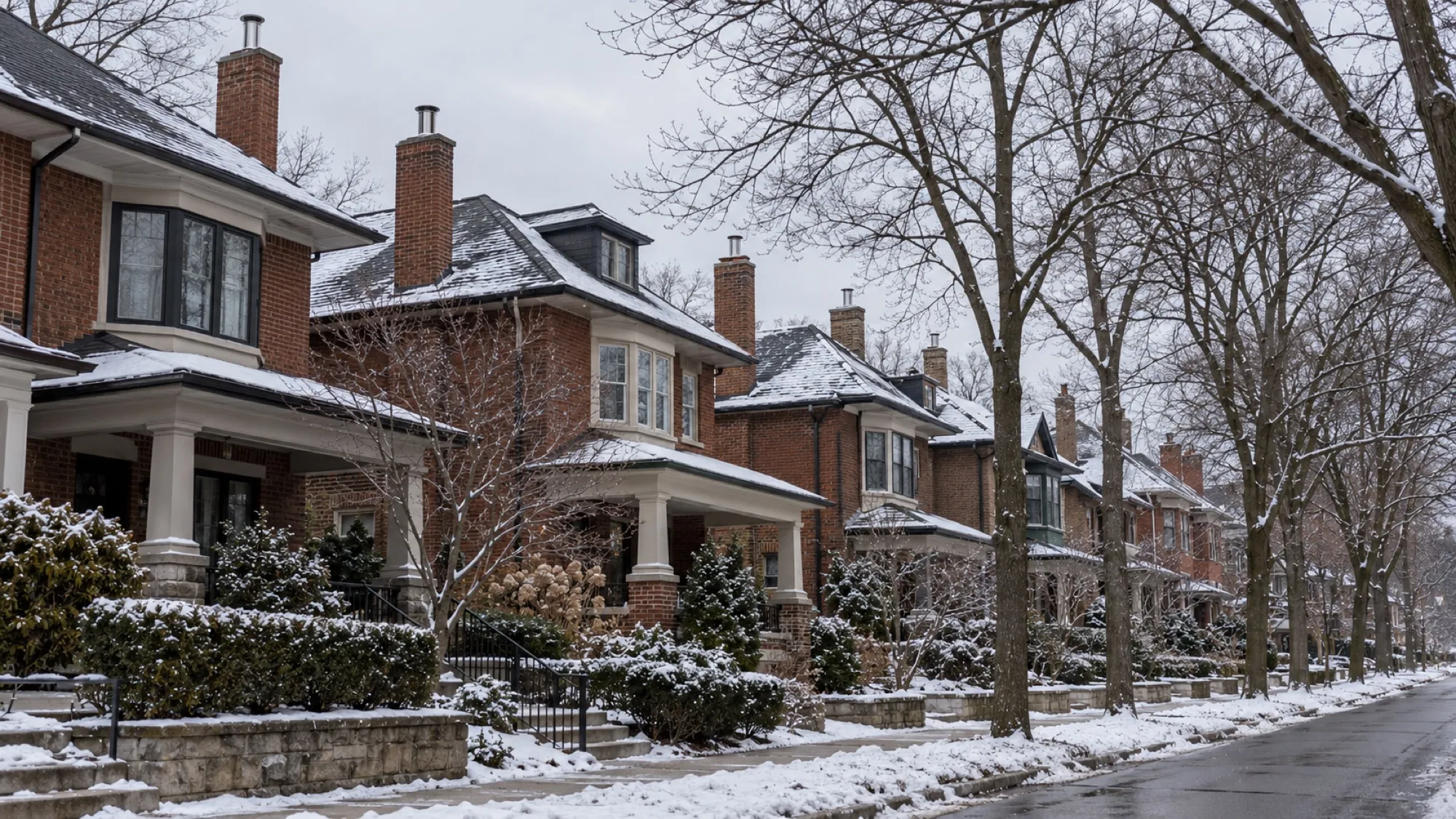
Freeze-thaw takes chimneys apart in this city, and it starts at the crown. Water gets into a crack, freezes overnight, widens it, and from then on the whole stack is wet — which is why so much chimney work here is masonry rather than sweeping. The older brick through the pre-war neighbourhoods is soft, so the mortar has to be softer still or the brick faces spall.
Ontario does not licence chimney sweeps. For solid fuel the credential that counts is WETT certification, which is what insurers and home inspectors ask for, and for anything involving a gas appliance the work is TSSA-registered and a sweep is not qualified to do it. Installation work falls under the Ontario Building Code, with permits through the City of Toronto.
How it works
Three steps, and you decide at the end of them.
-
1
You call and describe the problem
Tell us what you have noticed and where — the room, the smell, the noise, how long it has been going on. Give us your postal code and we will match you to an insured company covering your area. There is no form to fill in.
-
2
A local company takes it from there
They discuss the problem with you directly, arrange a time to inspect, and agree the work and the price with you before anything starts. That conversation is between you and them.
-
3
You decide whether to go ahead
You are under no obligation. If the quote or the approach is not what you wanted, you are free to say no and call someone else.
Common questions
Which areas of Toronto do you cover?
All of it. The quickest way to find out about your own area is to call and give us your postal code — if the nearest company is an hour out we will say so rather than waste your afternoon.
How soon can someone come out?
Sweeping and inspections are usually within a few days, except from the first cold week of November when the whole city calls at once — book late summer if you can. A cracked liner or anything smelling of combustion gases is same-day.
Are your partners insured?
Ontario does not licence this trade at provincial level, so the documents worth asking for are liability insurance and a WSIB clearance certificate. Any legitimate partner will show you both without being chased.
What does it cost?
Nothing, at any point. The work is carried out by our partner company, and everything about it — the price, the schedule and the guarantee — is agreed directly between you and them.
Get matched with a local contractor
Tell us what you need and we will match you with a licensed, insured chimney services company covering your area. No obligation.